
Young People Shape Conversations at UNGA High-Level Week
September 28, 2026
During last week’s UN General Assembly (UNGA) High-Level Week in New York, JA Worldwide brought young people, business leaders, researchers, and youth-serving organizations together to explore those changes and what they can do together.
Across five JA-hosted conversations, one question kept coming up: How can partnerships give young people a stronger voice and clearer pathways to opportunity?
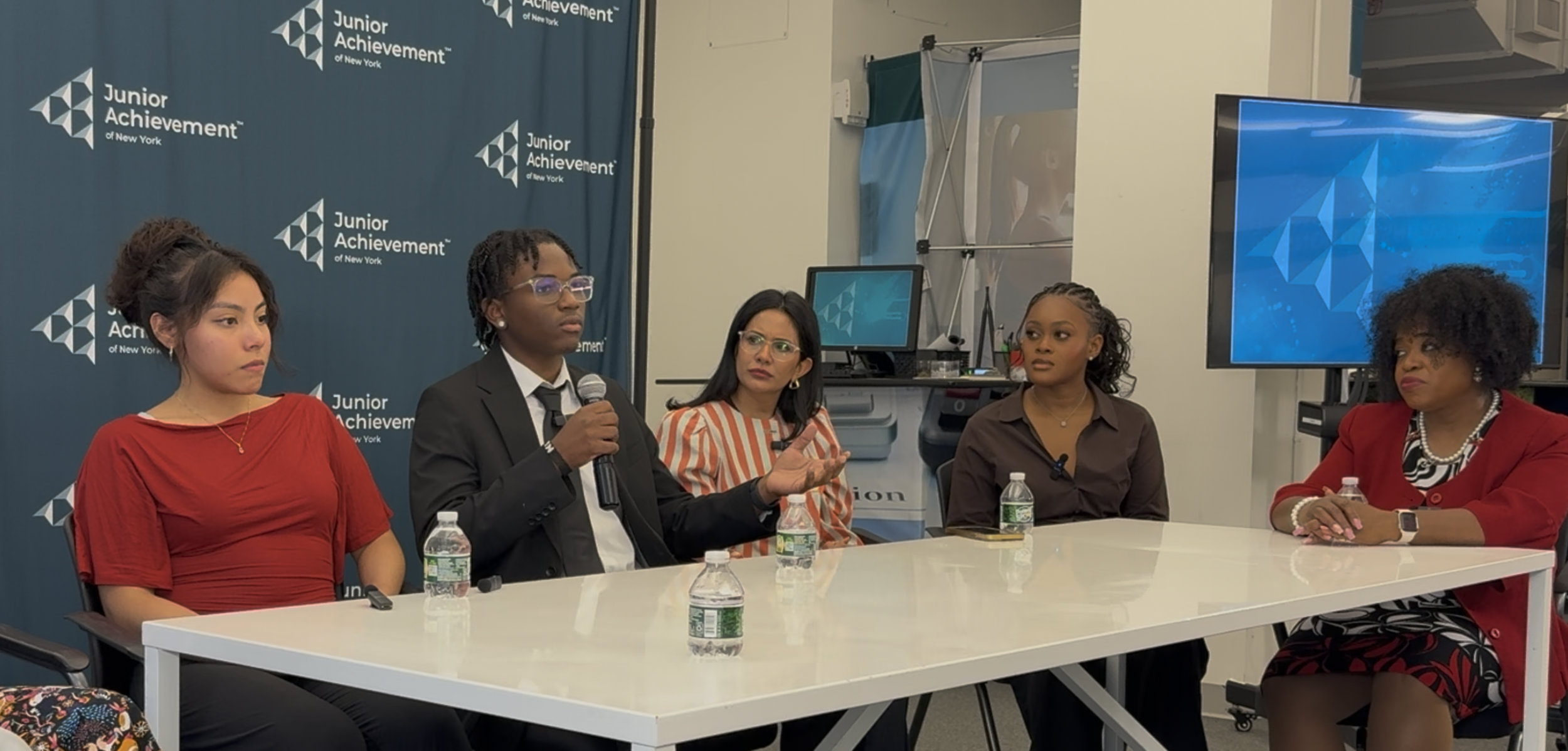
Renata Esquivel, Community Space Associate, Edwin Gould Foundation; Aanya Niaz, Global Leader, AWS Education Equity Initiative; Elizabeth Garbrah-Arthur, Student, Yonkers Middle/High School; and Margòt Goodson, Head of North America Inclusion, Impact & Communities, SAP America, listen to Nuru Jobe, Summer Intern, Yonkers Public Schools speak during the Beyond Mentorship panel.
JA opened the week with The AI Workforce Blueprint, a conversation drawing on a new report from the JA Asia Pacific AI Council, Ecosystm, and the JA Institute entitled “Workforce Blueprint for AI,” released last week. The session explored how AI and other emerging technologies could reshape jobs through 2035, and what educators, employers, and policymakers can do to help people adapt. The blueprint emphasizes durable skills, including critical thinking, judgment, creativity, problem-solving, and collaboration, alongside the ability to use new tools.
The question of preparation extended to the first steps into work. At an invitation-only roundtable hosted with Goodwall and McKinsey, leaders from business, education, workforce development, and youth-serving organizations examined what happens as AI changes entry-level roles. Internships, first jobs, and other early experiences help young people build skills, confidence, and professional relationships. Participants—including young professionals just out of school—explored how to preserve and expand those opportunities as career pathways evolve. A white paper summarizing the discussion will follow. Sign up to receive the white paper (the form is at the bottom of the linked page).
The conversations at Young People Have to See It to Be It: Opening the World of Work, hosted with MetLife, focused on access to firsthand experience. Workplace visits, job shadows, and internships can introduce young people to careers they might never encounter through school or family connections alone. Seeing people at work and asking candid questions can help them make more informed choices about their own paths.
JA also asked leaders to listen to young people as peers. In Beyond Mentorship: Learning Across Generations, hosted by JA Worldwide, JA of New York, and HP, young people exchanged perspectives with business leaders from HP, SAP Americas, and Amazon Web Services. They explored how expectations around technology, leadership, purpose, and flexibility are changing, and what each generation can learn from the other.
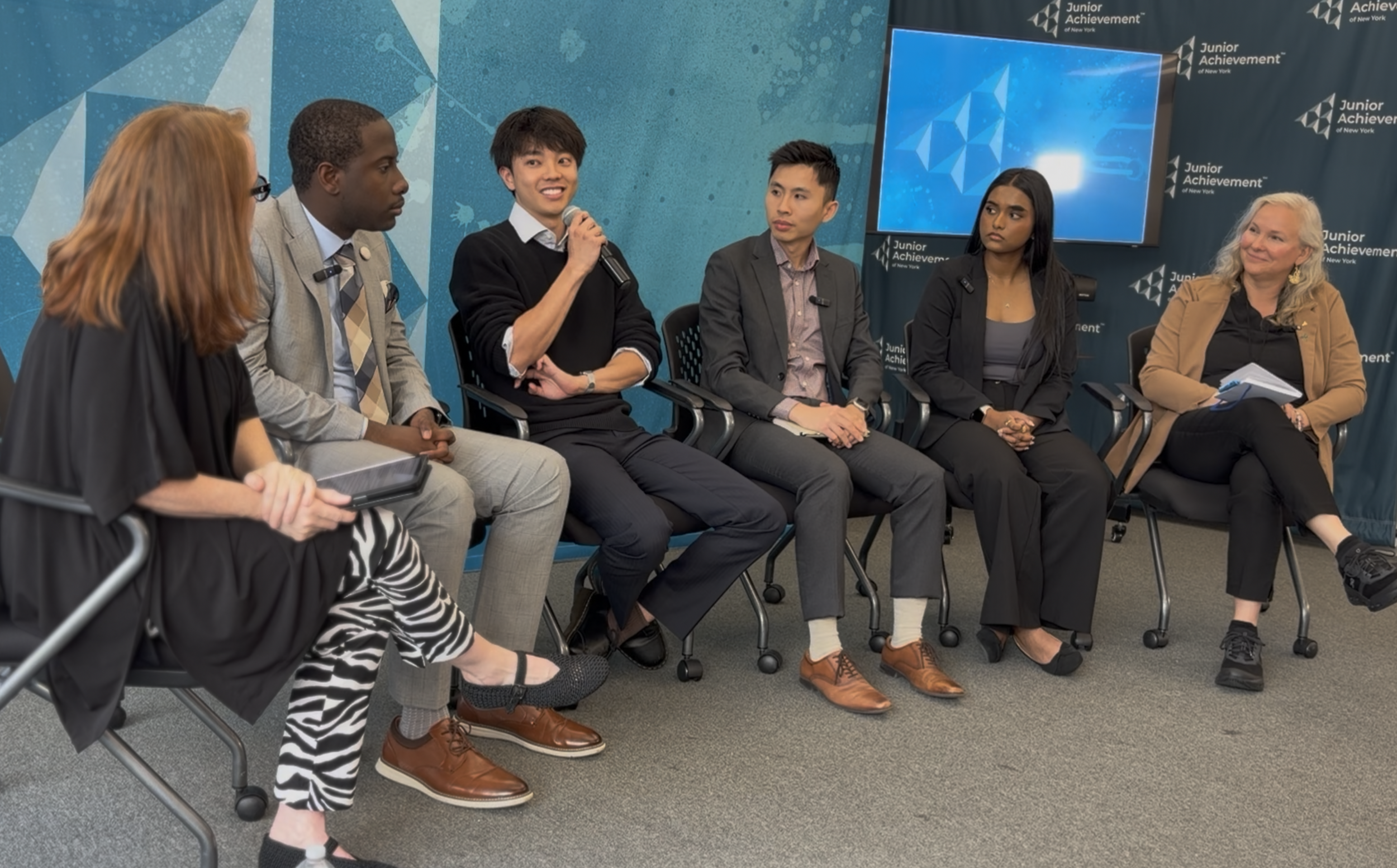
JA Japan alumnus Mone Hamada speaks during the Youth Priorities for a Changing World panel at Junior Achievement of New York.
JA’s final panel, Youth Priorities for a Changing World, brought young people together with leaders across research, education, business, civil society, and youth-serving organizations. The session offered a first public look at emerging findings from four months of World Youth for Action Listening Labs, where young people around the world have shared their hopes, concerns, and ideas. Those insights will help shape recommendations brought to the World Economic Forum’s annual meeting in January.
JA leaders also joined conversations throughout the city. JA Africa CEO Simi Nwogugu spoke at a Meta and Atlantic Council roundtable about equitable access to AI literacy and the partnerships needed to support it. JA Asia Pacific CEO Vivek Kumar joined leaders from business and civil society for a discussion hosted by the Project Management Institute and TIME on leadership, trust, sustainability, technological change, and the future of work. He emphasized the role of project management in turning shared goals into action, a skill JA Asia Pacific is helping young people develop through its partnership with the Project Management Institute Educational Foundation. Meanwhile, the JA Institute connected with researchers and partners on experiential learning and evidence generation, and launched Foundations of Scaling with the Brookings Institution.
UNGA High-Level Week created space to connect work that often happens in separate rooms: research on changing jobs, employers’ experience of those changes, and young people’s own priorities. The work now moves beyond New York. Across the JA network, local relationships with schools, businesses, volunteers, and communities can help turn what was discussed into experiences that prepare young people for the choices ahead.