
Strengthening JA's Leaders through Peer Learning
May 27, 2026

JA Worldwide launched the LEAD program in February 2025 to create space for executive directors and CEOs across the JA network to learn from one another, challenge themselves, and grow as globally minded leaders. Now in its second edition, the yearlong initiative continues to connect leaders across regions through mentorship, peer learning, leadership circles, immersive exchanges, and shared reflection.
The second LEAD cohort, which launched at the 2025 JA Global Leadership Conference in Rio de Janeiro, includes two leaders from each of JA’s six regions—JA Africa, JA Americas, JA Asia Pacific, JA Europe, INJAZ Al-Arab/JA MENA, and Junior Achievement USA. Participants not only represent different cultures, but they also come from diverse operating environments and leadership styles. Despite the differences, each LEAD participant described discovering shared challenges and opportunities through the program.
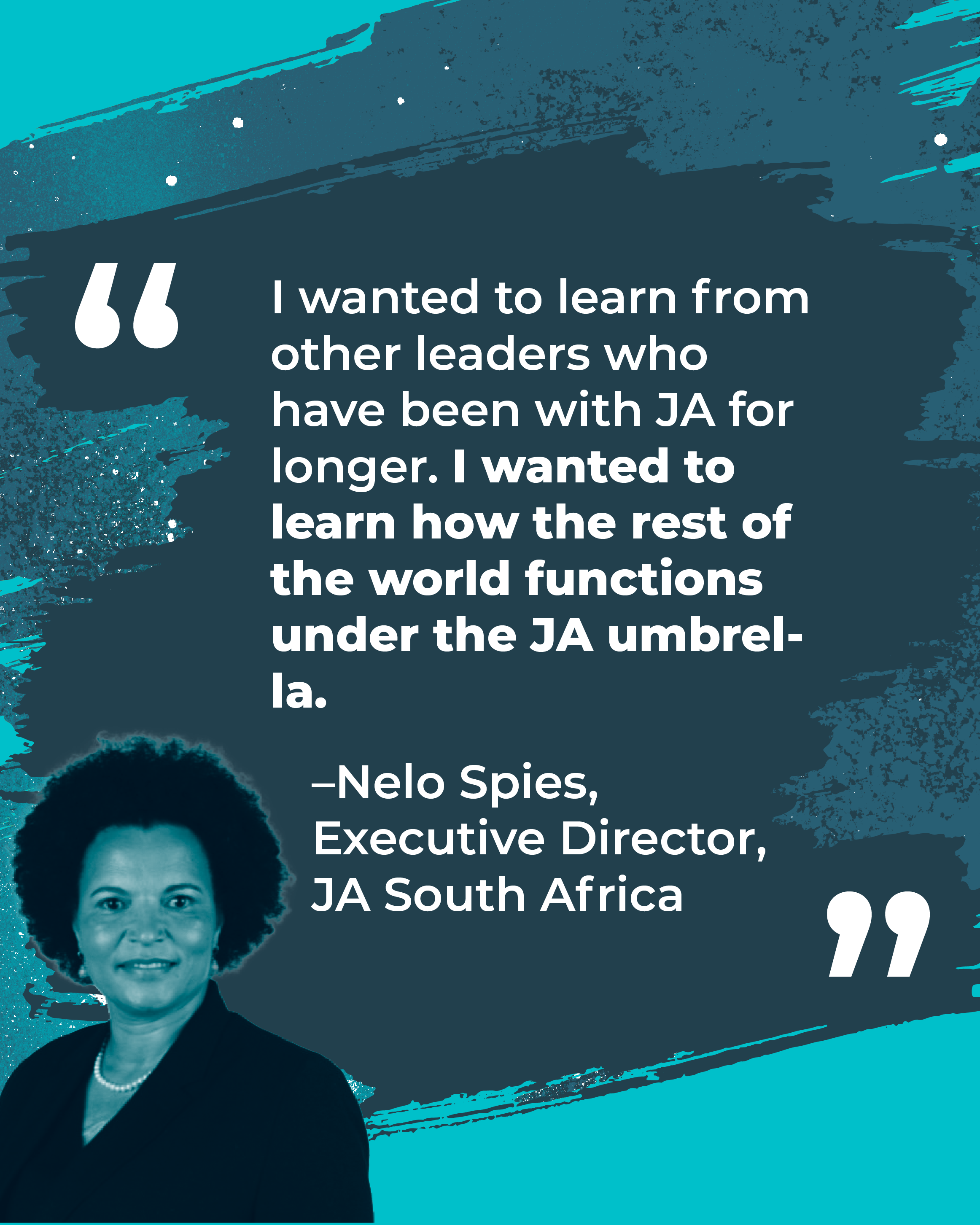
Nelo Spies, Executive Director of JA South Africa, entered the program hoping to better understand how other JA organizations operate across the world. As a newer CEO in the network, she saw LEAD as an opportunity to learn from experienced leaders navigating similar challenges in fundraising, strategy, and growth. “I wanted to learn from other leaders who have been with JA for longer,” she said. “I wanted to learn how the rest of the world functions under the JA umbrella.” Since joining the cohort, she has started collaborating with peers on digital learning and government engagement strategies.
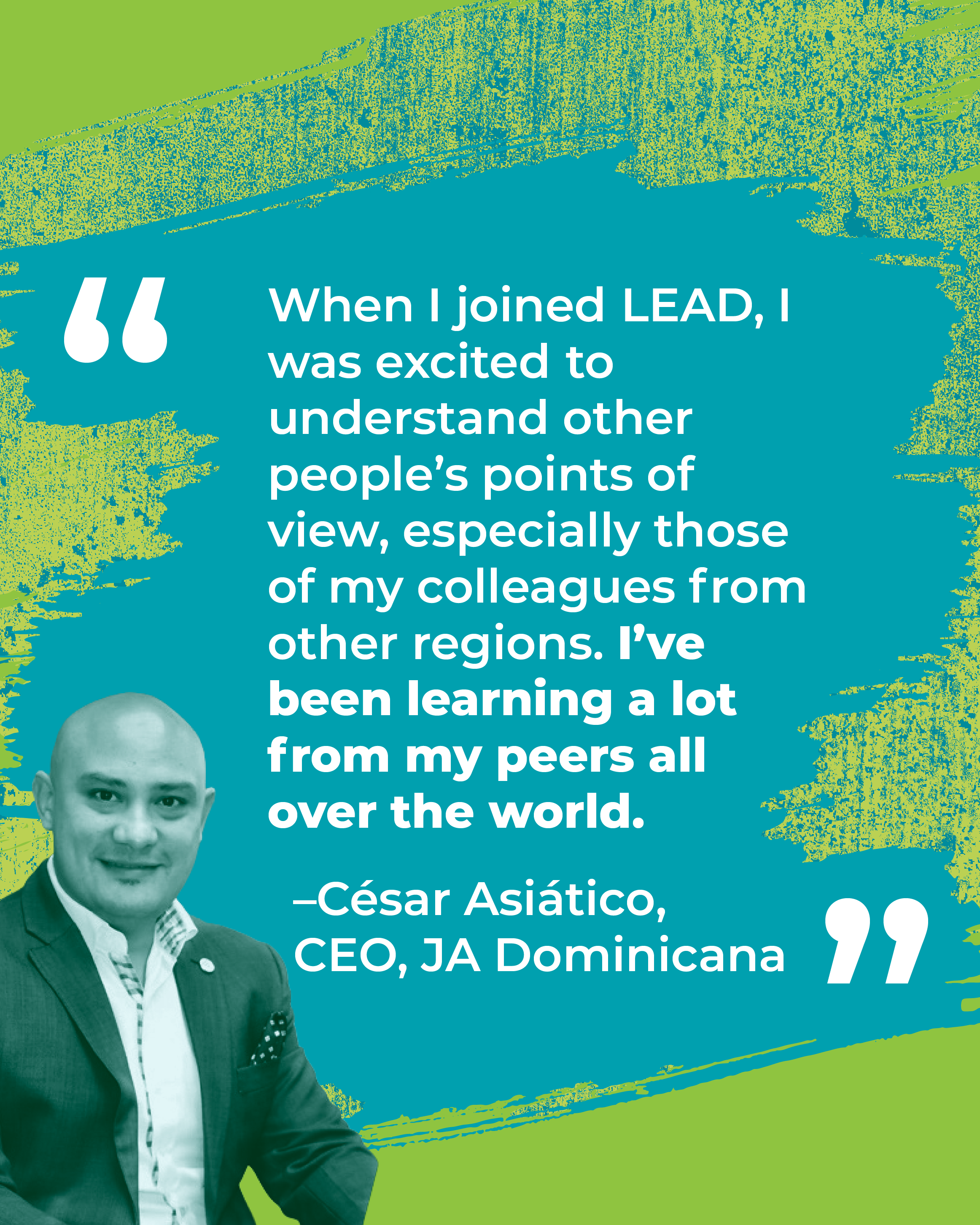
Conversely, César Asiático, Executive Director of JA Dominican Republic, has been with JA for more than two decades. He joined LEAD seeking to build even more relationships around the world. “When I joined LEAD, I was excited to understand other people’s points of view, especially those of my colleagues from other regions. I’ve been learning a lot from my peers all over the world.” Through LEAD, César is deepening his understanding of leadership across cultures and regions.


Jack Kosakowski, former CEO of Junior Achievement USA and one of the creators behind the LEAD initiative, said he and Erin Sawyer, JA Worldwide Chief of People Development, designed the program to strengthen connections across the global JA network. “JA has extraordinary leaders across the globe, but many operate in relative isolation within their own regions, countries, or communities,” Jack explained. “We wanted to create a program that intentionally connected leaders across cultures, economies, and operating environments so they could learn directly from one another.”
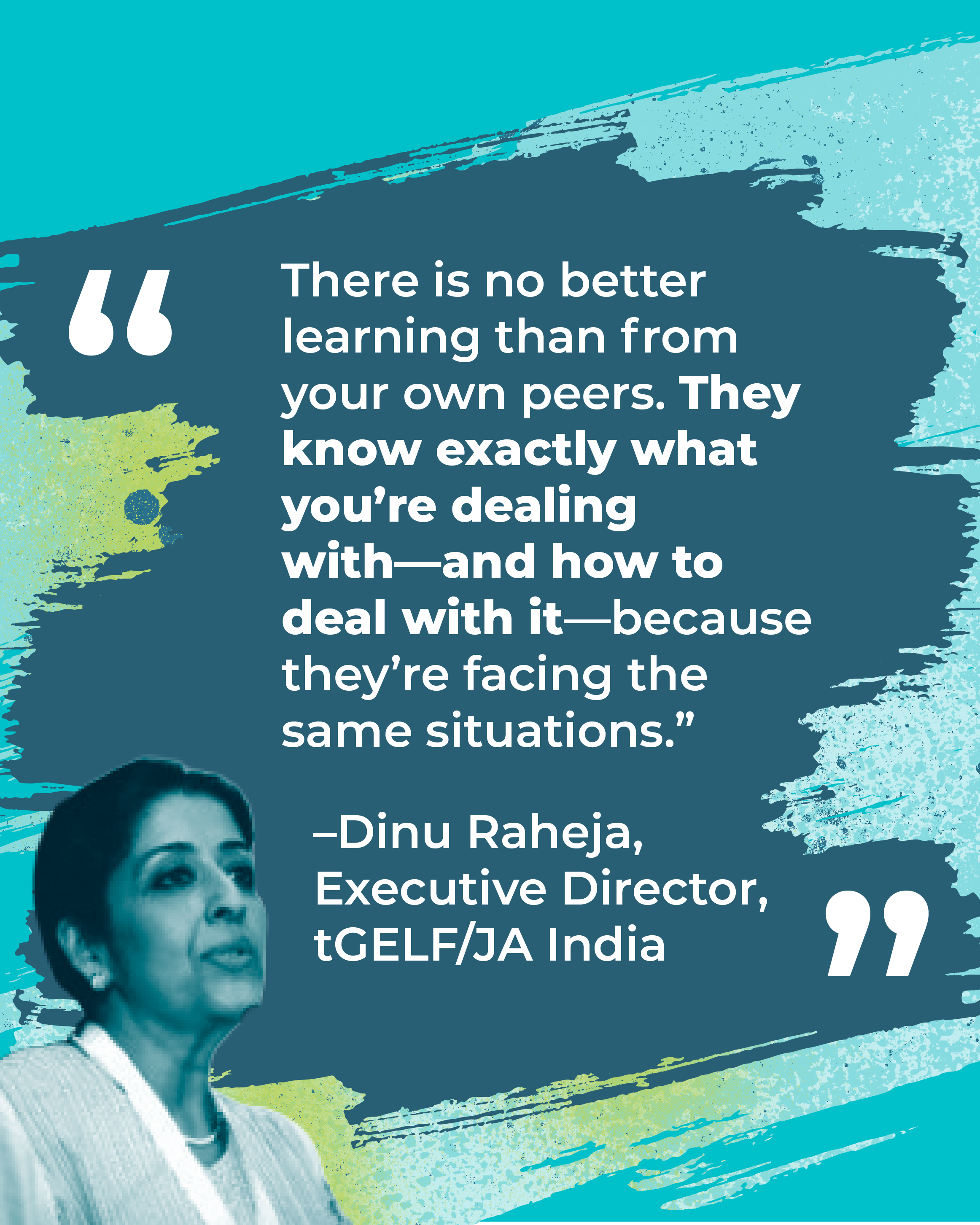
Dinu Raheja, Executive Director of tGELF/JA India, described the value of learning directly from peers who understand the realities of leading JA organizations. “There is no better learning than from your own peers,” Dinu said. “They know exactly what you’re dealing with—and how to deal with it—because they’re facing the same situations.”
“There is something uniquely powerful about learning from someone who is walking a similar path, rather than listening to some expert in a training session who has never led a JA operation,” Jack shared. “Peer learning creates authenticity, trust, vulnerability, and practical insight in ways that traditional training programs often cannot replicate. Participants don’t just exchange ideas, they exchange perspectives.”
LEAD pairs each executive with another cohort participant from a different region, creating opportunities for ongoing collaboration and perspective-sharing throughout the year. As part of the program, they job-shadow each other during a weeklong exchange visit, stepping into the other’s organization to observe their leadership in action. Participants attend meetings, engage with staff and stakeholders, visit schools and programs, and gain firsthand insight into how JA organizations operate in different cultural and economic contexts. More than observational visits, these exchanges often lead to candid conversations, new ideas, deeper global understanding, and lasting professional relationships across the JA network.
Dinu partnered with Marta Slováková, CEO of JA Slovakia. During Dinu’s visit to Slovakia, Marta introduced her to corporate partners, embassy representatives, and JA leaders across Central Europe. “Slovakia is a small country, but we can connect India with everybody,” Marta said. “This is the essence of One JA.”
INJAZ UAE CEO Razan Bashiti shared that the program broadened her perspective on what global collaboration within the JA network could look like. Through regular conversations with her LEAD partner Sunah Lee, Executive Director of JA Korea, she has explored ideas ranging from staffing structures to potential student exchange opportunities. “LEAD came in at the right time,” Razan shared. “I needed to challenge myself differently. The fact that this was actually global got me super excited.”
Beyond the formal sessions, LEAD participants form relationships that extend far beyond the program itself. Several spoke about exchanging ideas weekly, building friendships across regions, and gaining confidence through shared experiences with peers who understand the realities of nonprofit leadership.
Jack emphasized that LEAD focuses less on traditional leadership training and more on authentic peer learning and relationship-building. “There is something uniquely powerful about learning from someone who is walking a similar path,” he said. “Peer learning creates authenticity, trust, vulnerability, and practical insight in ways that traditional training programs often cannot replicate.”
“Programs like LEAD create space for JA leaders to learn directly from one another across cultures, regions, and operating environments,” Erin Sawyer reflected. “When executives build relationships with peers around the world, they gain fresh perspectives, share practical solutions, and strengthen their ability to lead in a rapidly changing global environment. At JA Worldwide, we believe leadership development is not only about individual growth. It’s about building a stronger, more connected global network that can better serve young people everywhere.”
The LEAD journey continues to reshape how participants think about collaboration, leadership, and the future of the global JA network. Through the program, these leaders strengthen their own organizations while building stronger connections across the global JA community.