
Young Entrepreneurs Gather in Seoul for the 2026 JA Asia Pacific Company of the Year Competition
March 13, 2026
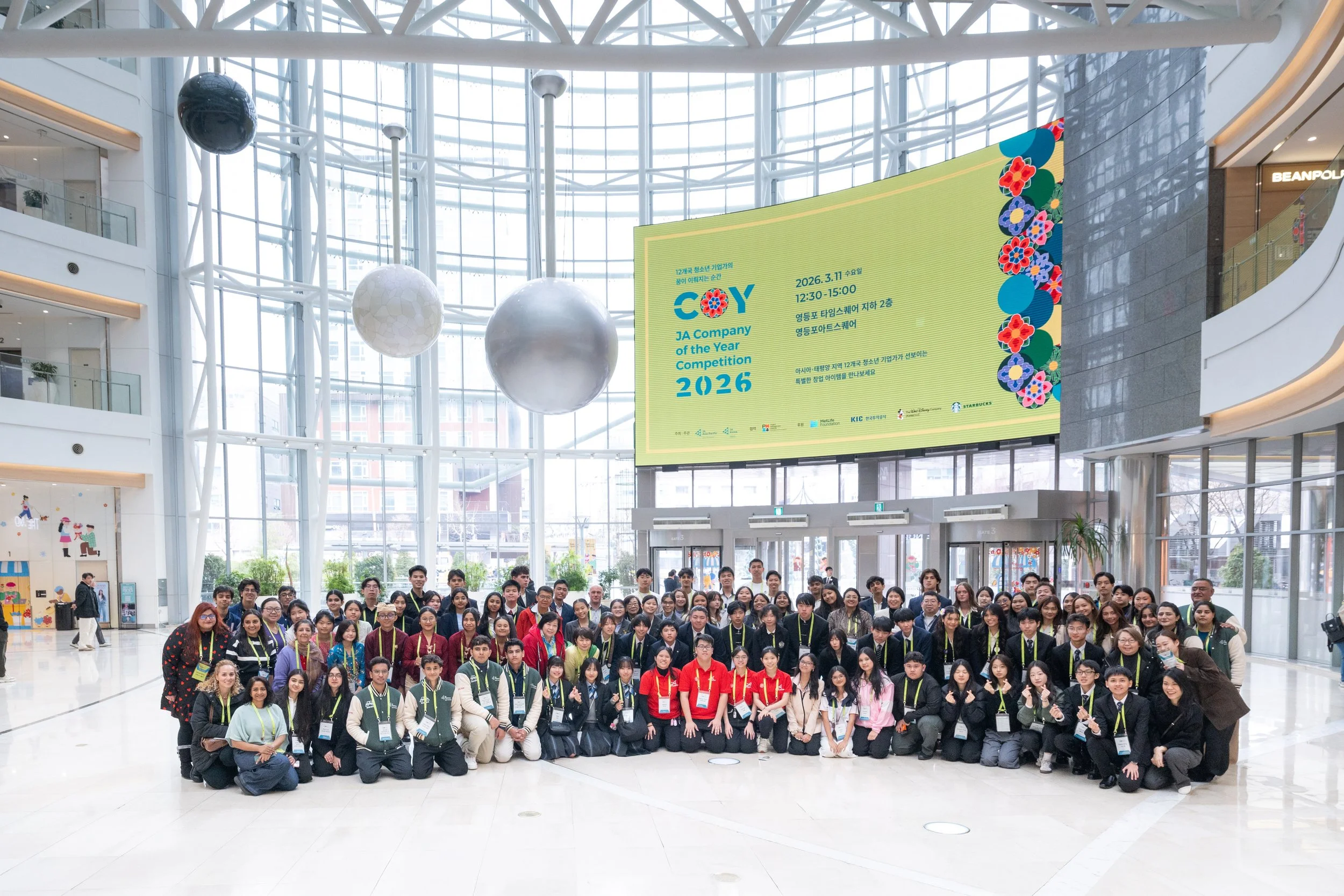
Twenty-one JA student companies from 12 locations across Asia Pacific gathered in Seoul, Korea, for the 2026 JA Asia Pacific Company of the Year Competition. Hosted by JA Korea, JA student companies came together to share ideas, learn from one another, and showcase the businesses they built through the JA Company Program.
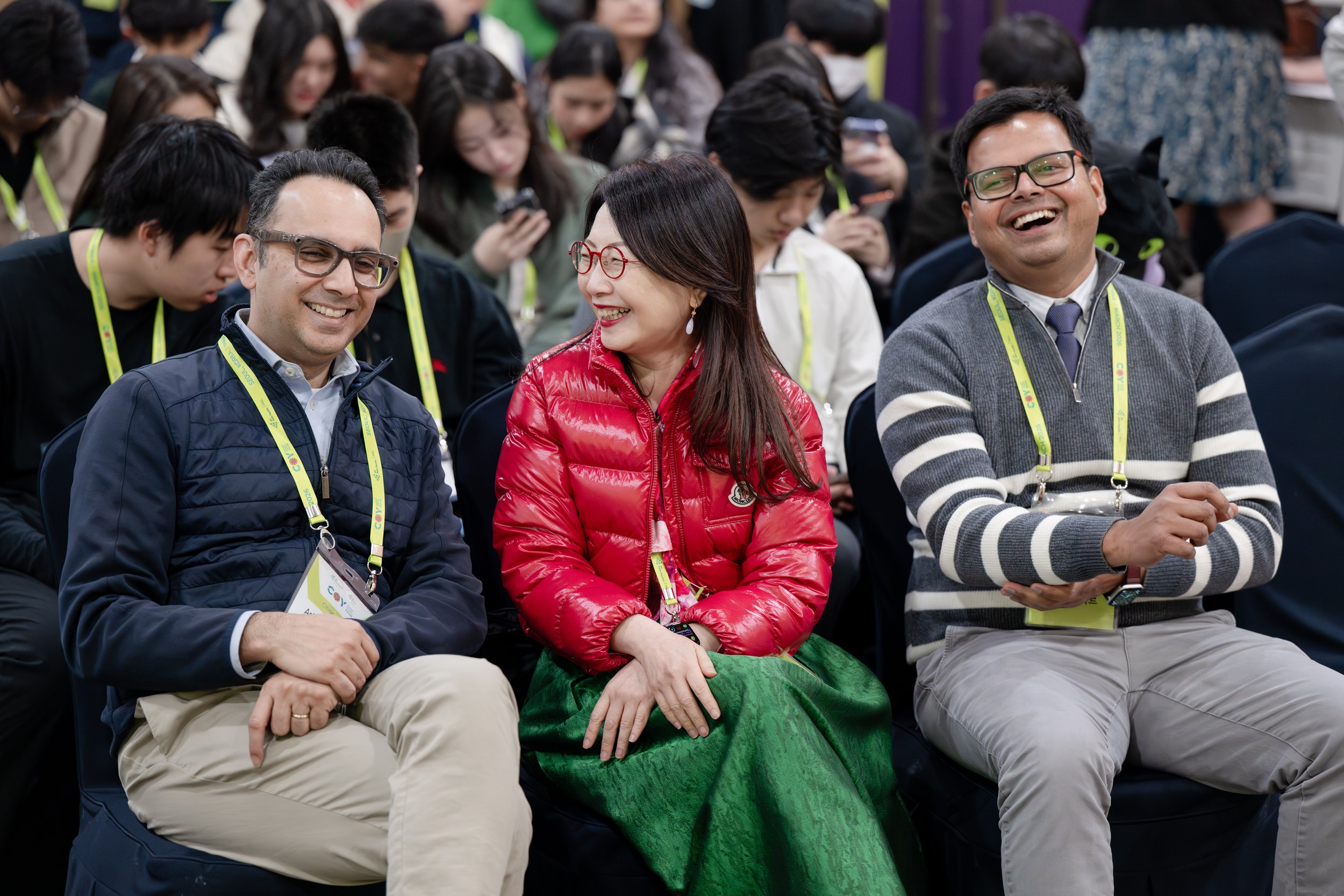
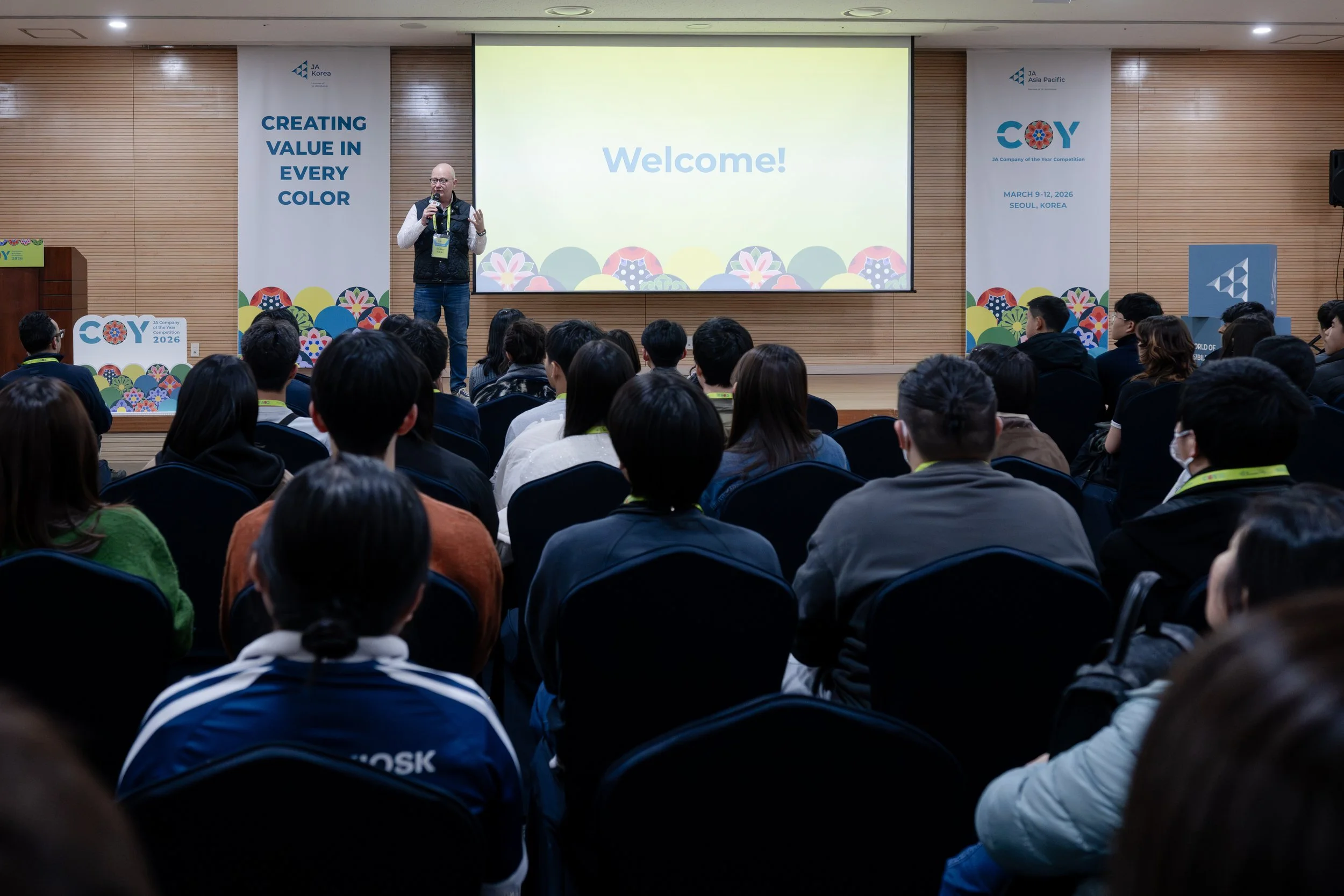
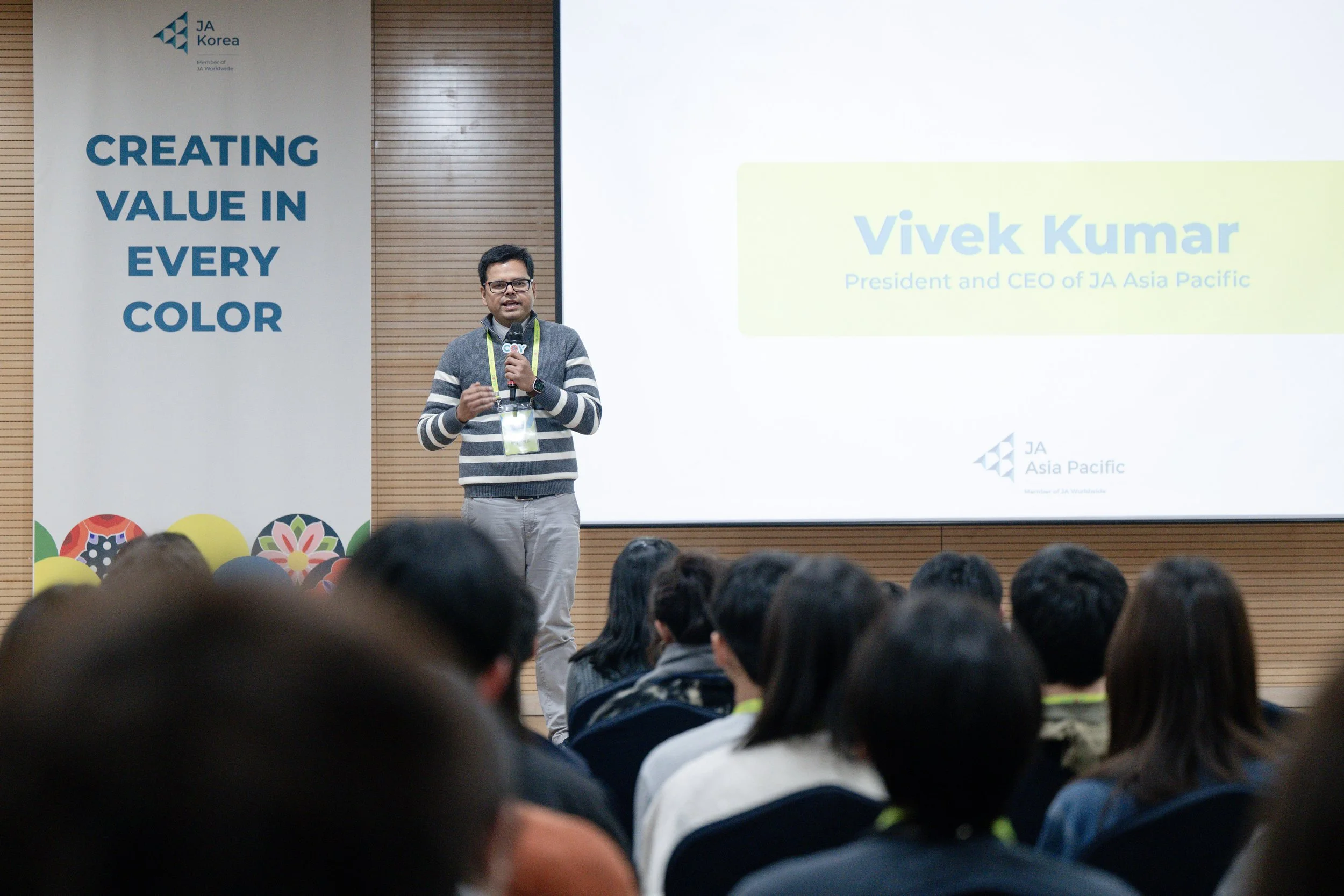
Day 1 kicked off with an opening session that welcomed students to a week of learning, collaboration, and friendly competition. Vivek Kumar, President of JA Asia Pacific, and Vivian Lau, Board Member of JA Korea, encouraged participants to take advantage of the opportunity to connect with peers from across the region, exchange ideas, and embrace the challenges ahead.
Students also heard from Jaeyeon Han, a JA Korea alumna and CEO of Purposed, who reflected on how her experience in the JA Company Program shaped her entrepreneurial journey. Speaking directly to the students preparing to present their own companies, she shared several lessons she learned as a young entrepreneur: do not fear failure, stay resilient when plans change, speak openly about challenges, and remember that every project, successful or not, builds skills for the future.
These ideas reflect the foundation of the JA Company Program, in which students learn to start and run a real business with guidance from volunteer mentors in the business community. Through the experience, participants develop entrepreneurship, financial literacy, teamwork, and communication skills that prepare them for the future of work.
The first evening concluded on a lighter note, as students gathered for an informal cultural activity featuring K-pop dancing, giving them a chance to build confidence and team spirit before the competition officially began.
Meet the JA Student Companies
China: Oasis Studios created Iridescent, a 2.5D pixel-art narrative game in which players travel to 1889 Saint-Rémy-de-Provence, interact with Vincent van Gogh, and explore themes of identity and purpose while helping complete The Starry Night.
Guam: Hatsa produced The Melting Pot, an interactive cookbook that celebrates Guam’s multicultural community through recipes and cultural stories.
Guam: Konni’ designed a Guam-themed matching card game featuring 57 hand-drawn icons representing the island’s culture, landmarks, and traditions.
Hong Kong SAR—China: BataSync created Hedge-Talk, a card game designed to teach nonviolent communication by helping players practice expressing thoughts and emotions constructively while understanding others’ perspectives.
Hong Kong SAR—China: Wealth Wizards’ fantasy-themed tabletop game makes financial literacy engaging and interactive through a board, character elements, and color-coordinated cards that introduce market events, financial choices, and real-life money scenarios.
India: DeNew manufactures bags made from upcycled denim that include built-in mental wellness tools such as a magnetic mini board, calming strips, and stress-relief charms.
India: Lignora produces eco-friendly board games and desk organizers made from upcycled materials, including sustainability-themed games such as Flip 4 Future and Saap Seedhi (SDG Edition).
Indonesia: Auterra created LUFT D’HUMFY, an eco-friendly humidity-reducing product made from carbonized coffee grounds and husks that absorb moisture, eliminate odors, and can later be repurposed as fertilizer.
Japan: Bright Arrow produces handcrafted accessories and craft kits made from sea glass and marine waste, including straps and decorative items shaped by the ocean.
Japan: Clovia Corporation produces handmade beaded accessories and DIY craft kits, including bracelets and decorative straps that can attach to bags, smartphones, or clothing.
Malaysia: Aurora Enterprise’s board game, The Chain of Life, allows players to build food chains, manage habitats, and respond to environmental challenges.
Malaysia: CHeSire Enterprise created Save My Kopitiam, a Malaysian-themed board game that teaches culture and traditional foods through café-building gameplay, alongside related cultural merchandise.
Pakistan: Next Papers built a digital education platform that allows students preparing for Cambridge International examinations to generate customized practice papers and tailored marking schemes based on selected topics, years, components, and variants.
Philippines: Alerion created DefendU, a smart personal safety device that emits an alarm and sends Bluetooth-connected alerts, including real-time GPS location, to emergency contacts through a mobile app.
Philippines: Kapwa Co. manufactures the Klimma Collection, a transformable jacket with detachable sleeves that converts from a full jacket into a sleeveless vest for different weather conditions.
Singapore: LumaBand created an AI-powered fall-detection wristband that automatically alerts caregivers via SMS and shares GPS location when a fall is detected.
Singapore: Pocket-it created a compact organizational sling with multiple accessible pockets and a hidden compartment, designed for secure, convenient everyday carry.
South Korea: Crevice created TAGBACK, an NFC tag that attaches to personal belongings and links to a personalized webpage to help lost items be identified and returned.
South Korea: Reporch created an online coding platform that simulates real-world development environments to help users practice frontend, backend, and API development through production-like challenges.
Thailand: Anizen created a 160-page optimized daily planner with structured planning pages and a built-in pen holder to help users organize tasks, track goals, and manage daily priorities.
Thailand: Foldex created an all-in-one multitasking folder that combines multiple storage compartments with a built-in LCD writing board to support organization and interactive screen-free learning for children.
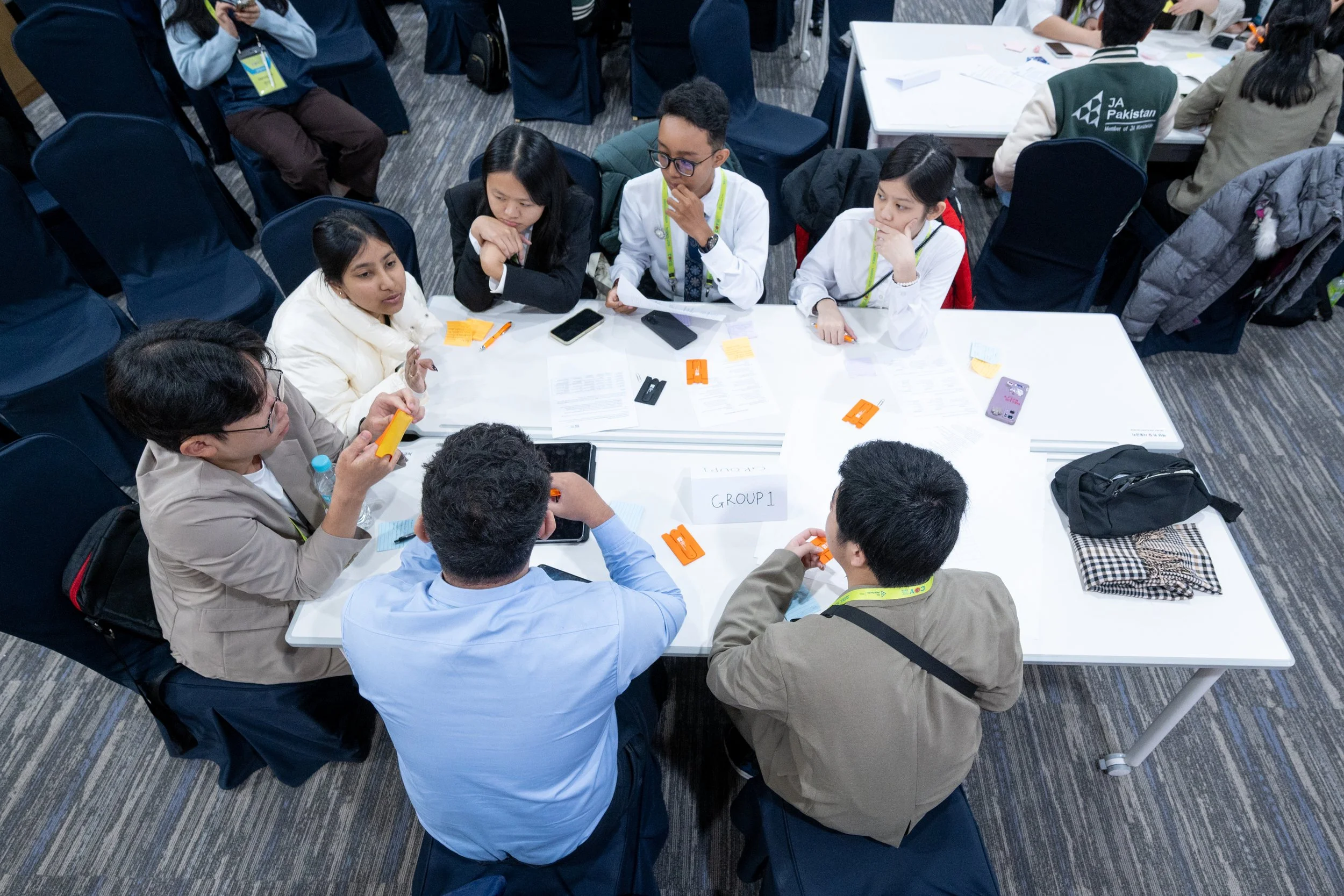
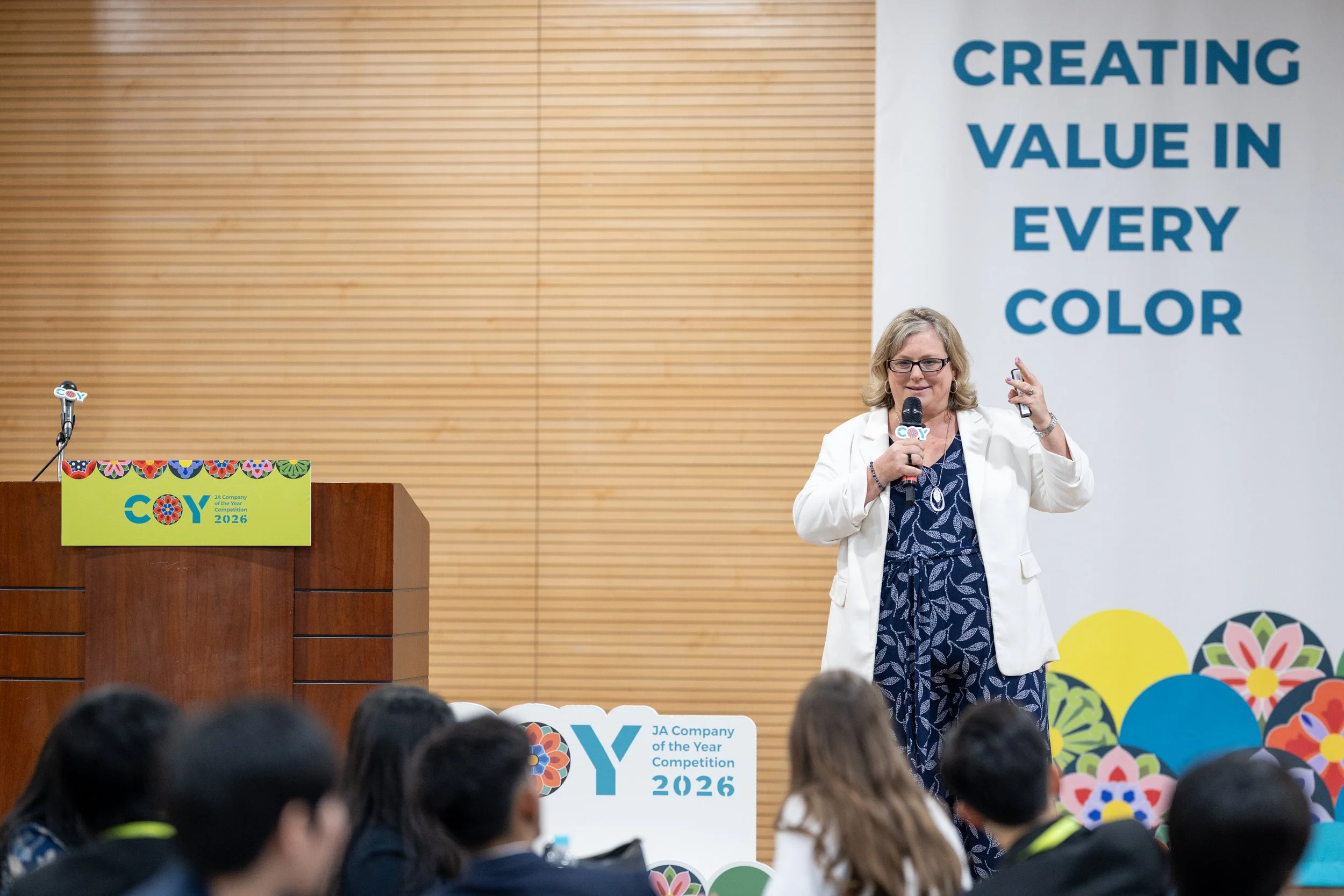
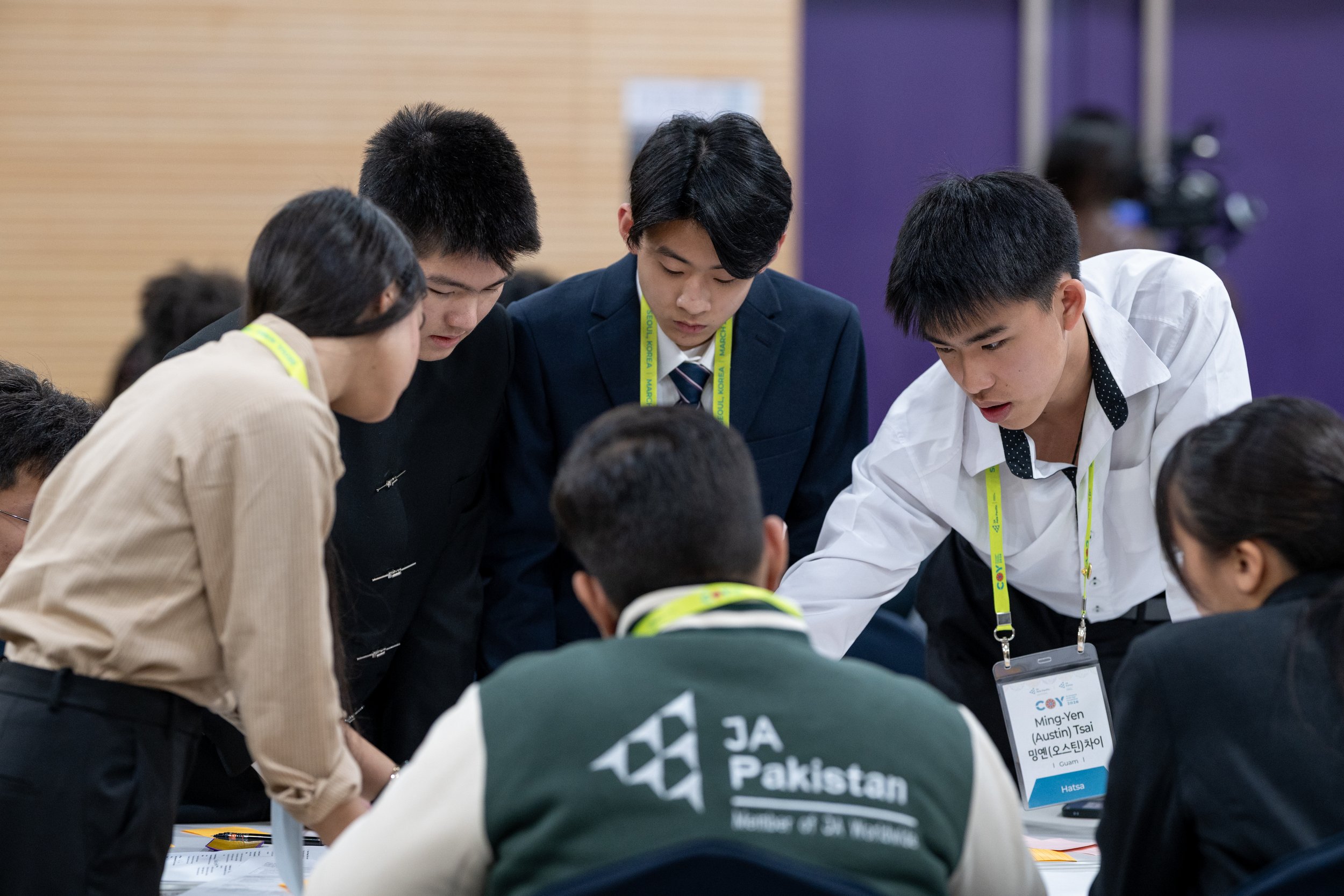
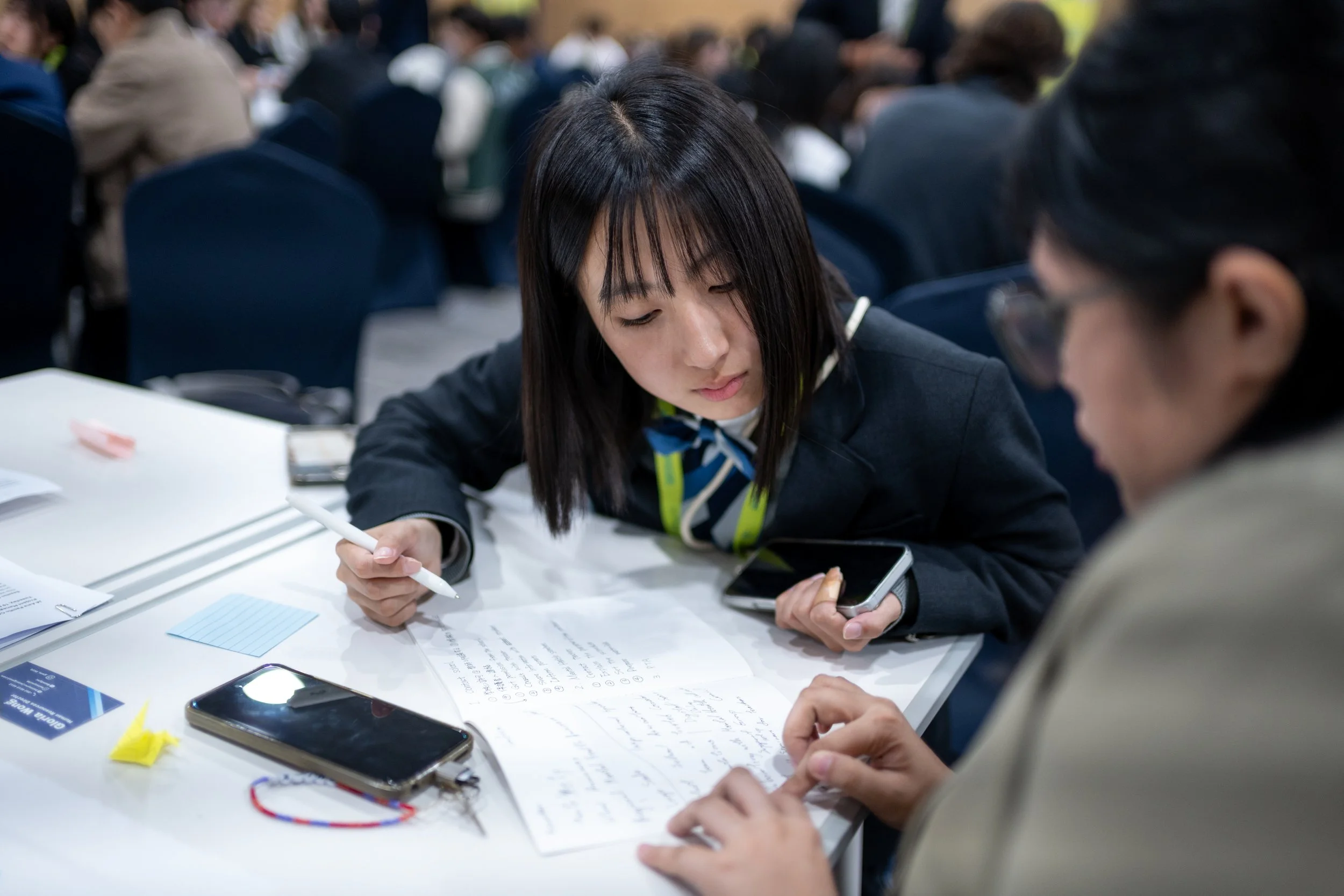
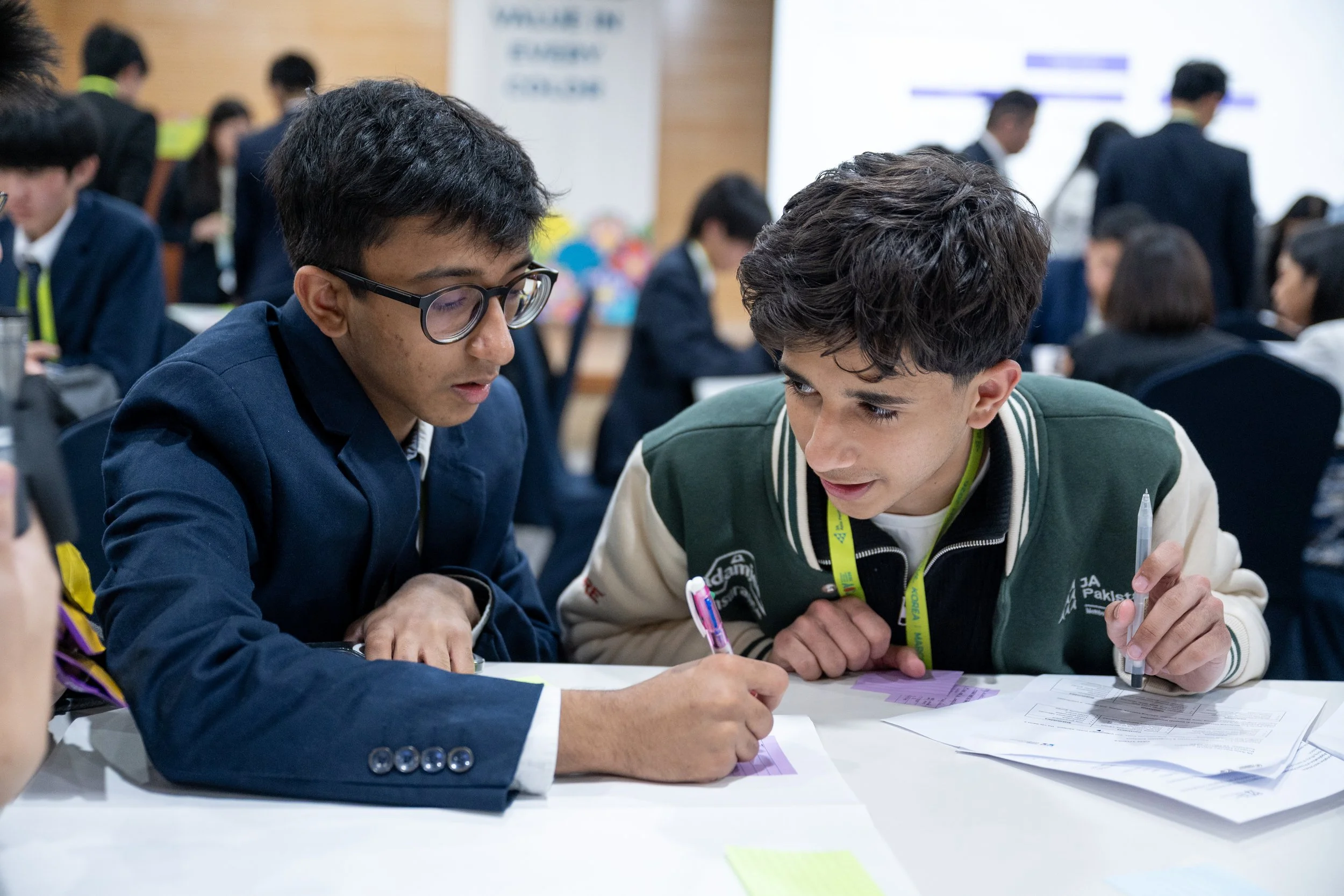
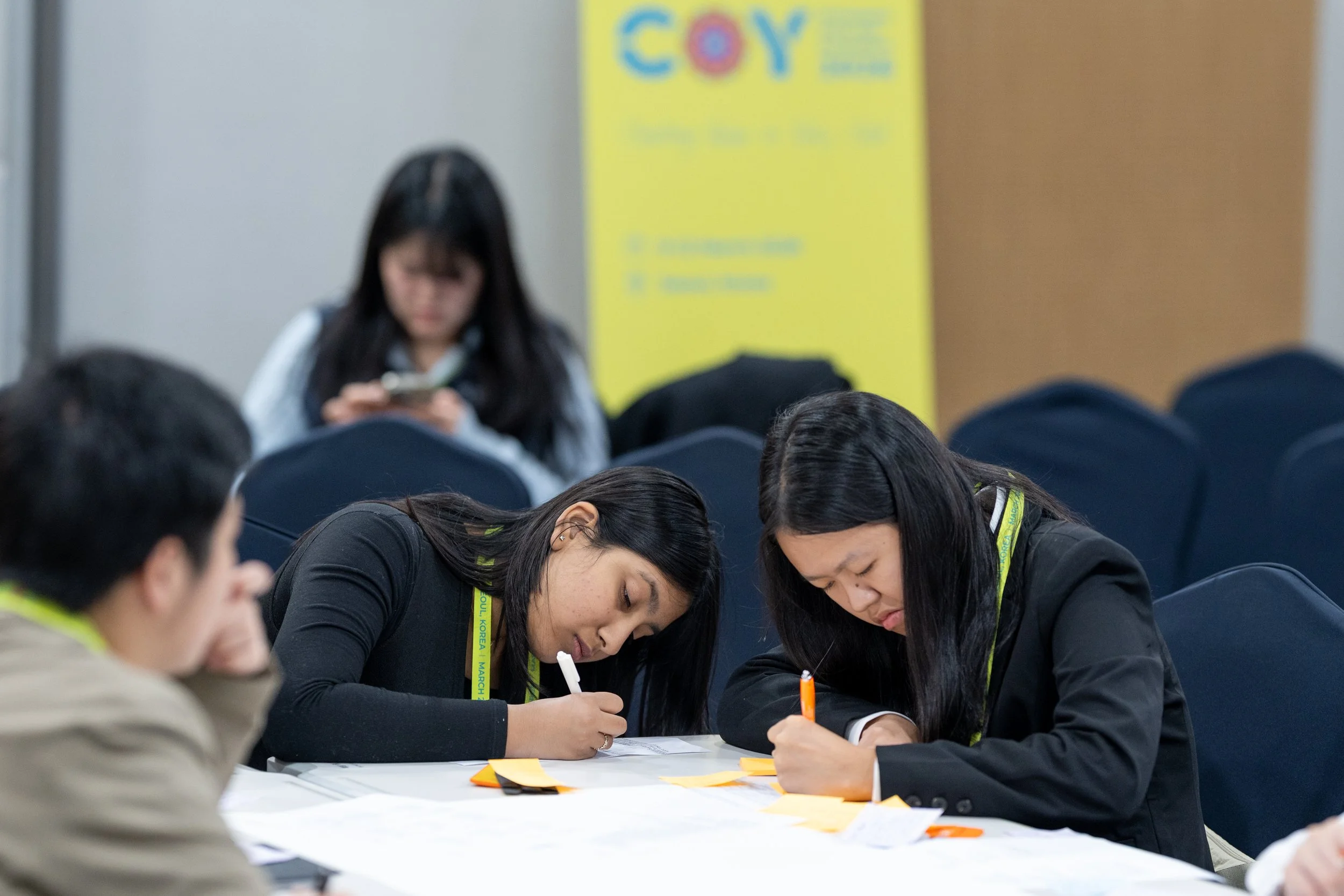
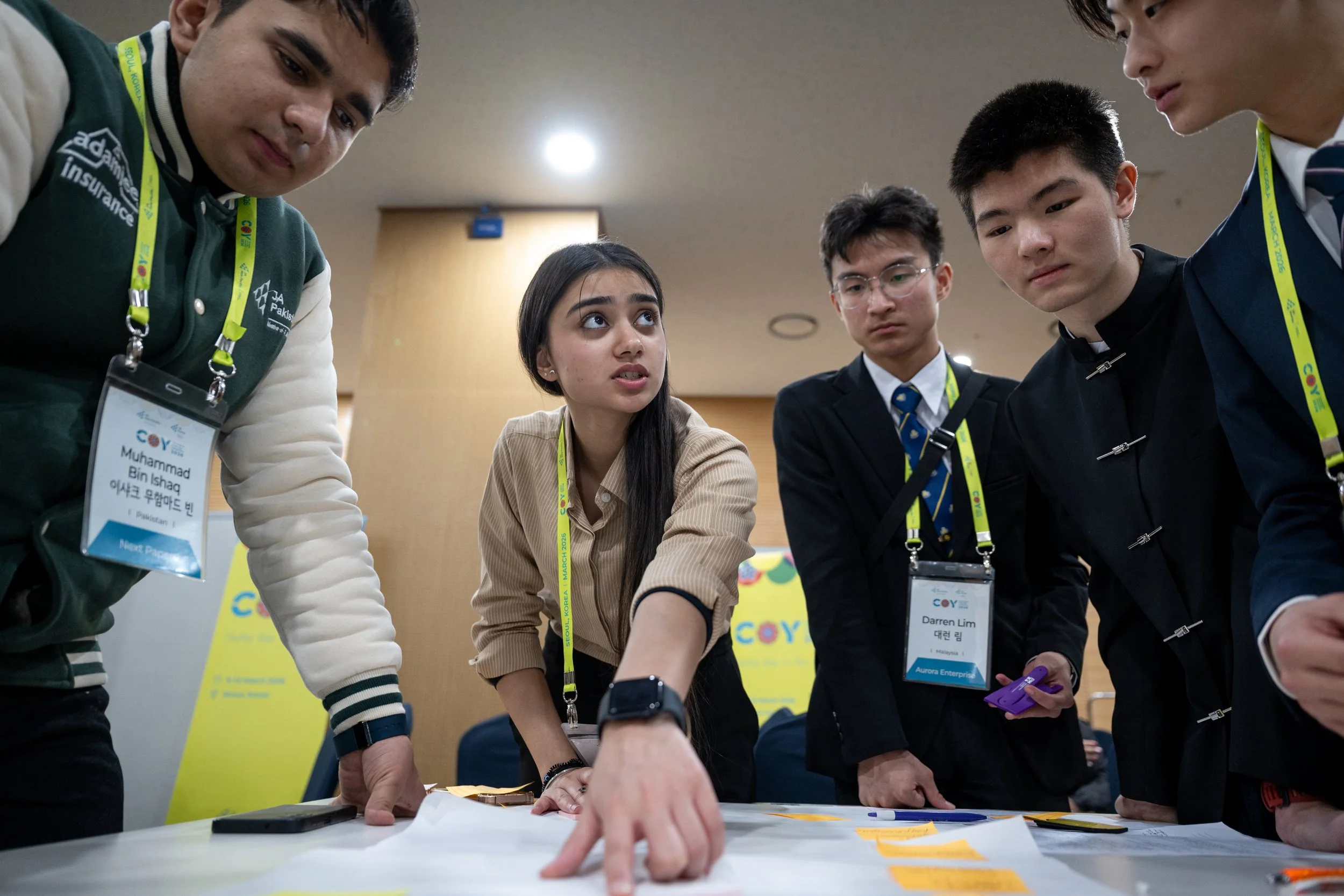
Day 2 focused on developing the skills needed to run and grow a business.
Eunhyung Lee, President of JA Korea, formally welcomed participants to Seoul and encouraged them to learn from one another throughout the week. Students then heard a keynote from JA Worldwide CEO Asheesh Advani, who emphasized the importance of learning by doing, choosing strong role models, practicing gratitude, and building confidence through experience.
The day continued with the Project Management Fundamentals Challenge, led by Amber Buschmann of the Project Management Institute Educational Foundation (PMIEF). During the session, students applied project management tools to real-world scenarios, learning how planning, time management, and teamwork can strengthen a business's success.
In the lead-up to the competition, students participated in a virtual mentoring session led by JA Worldwide Global Council member Camille R. Blair, where they refined their presentations, practiced responding to judges’ questions, and strengthened the communication of their value proposition and financial results. The session helped students sharpen the skills they would need when presenting their companies later in the week.
The day concluded with a guided tour of Seoul, giving participants time to connect with peers from different locations, build friendships, and experience the host city together before the competition activities continued.
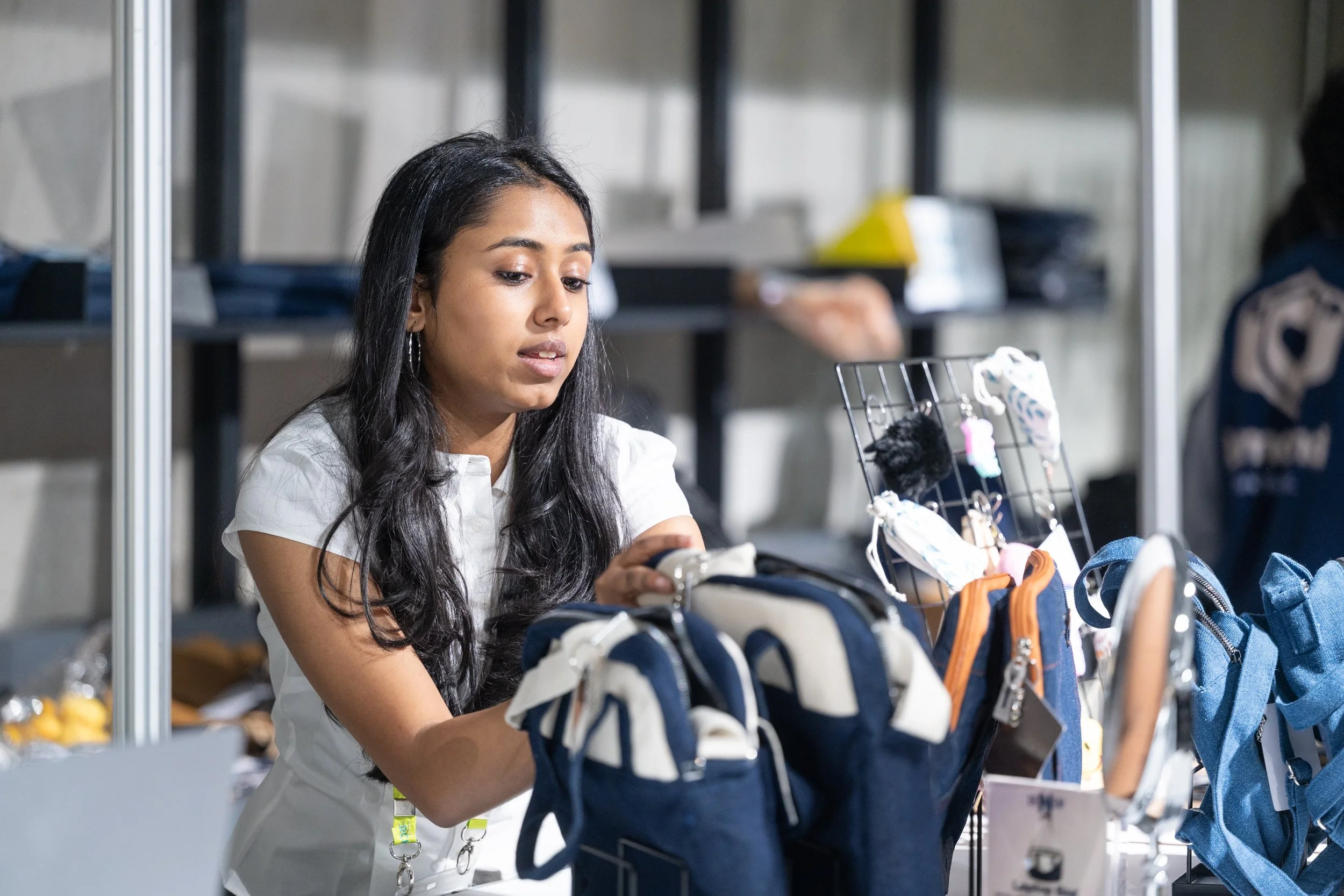
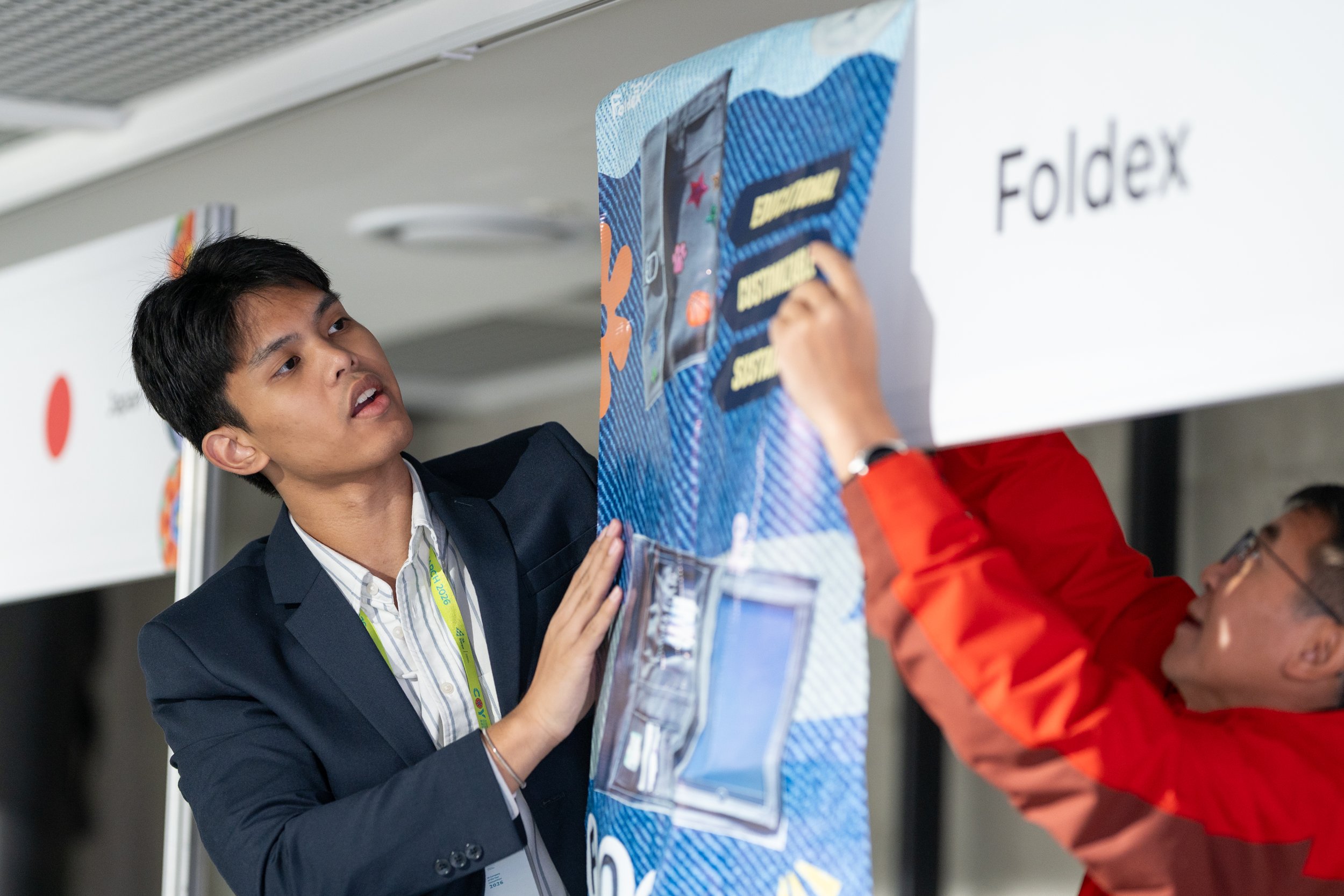
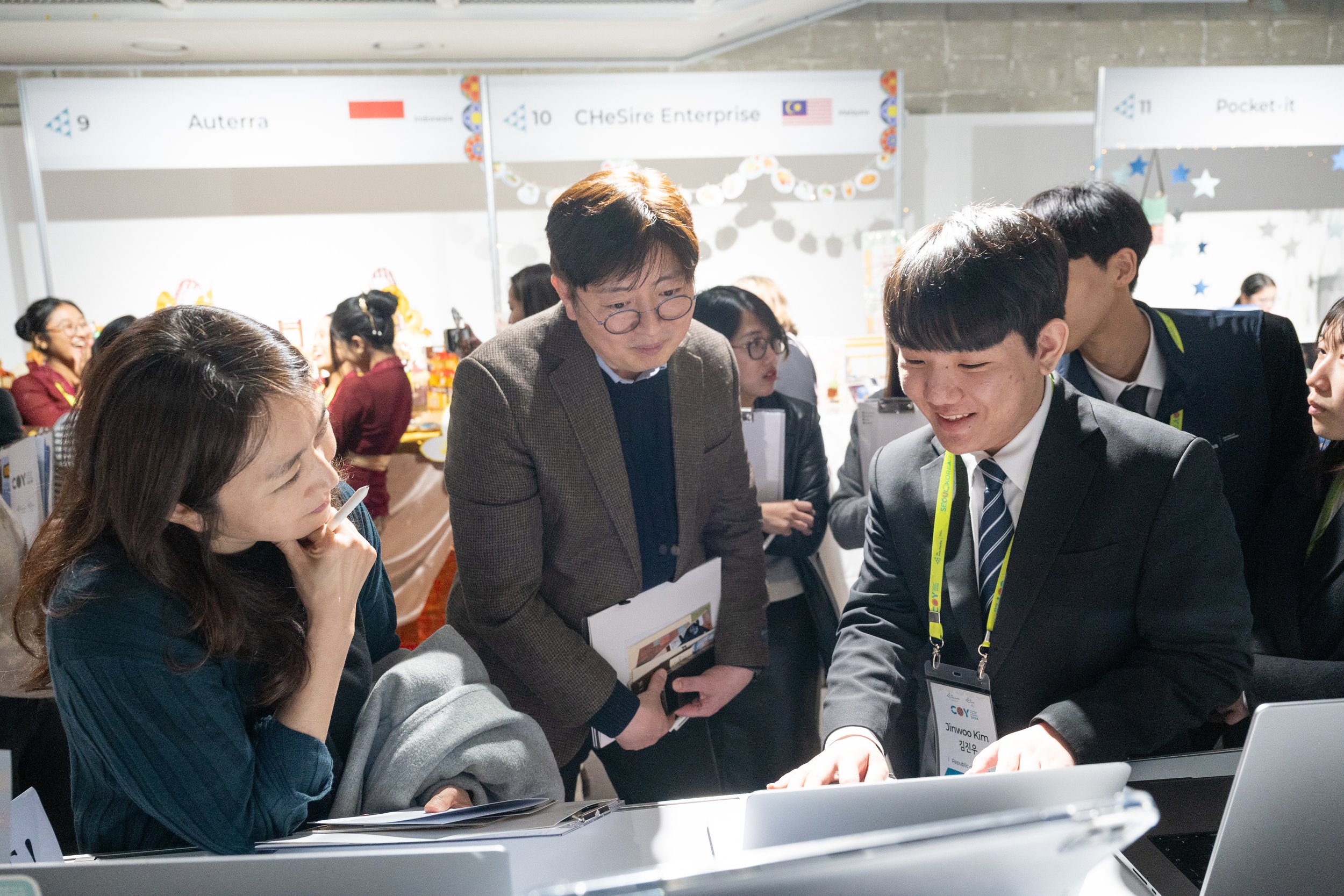
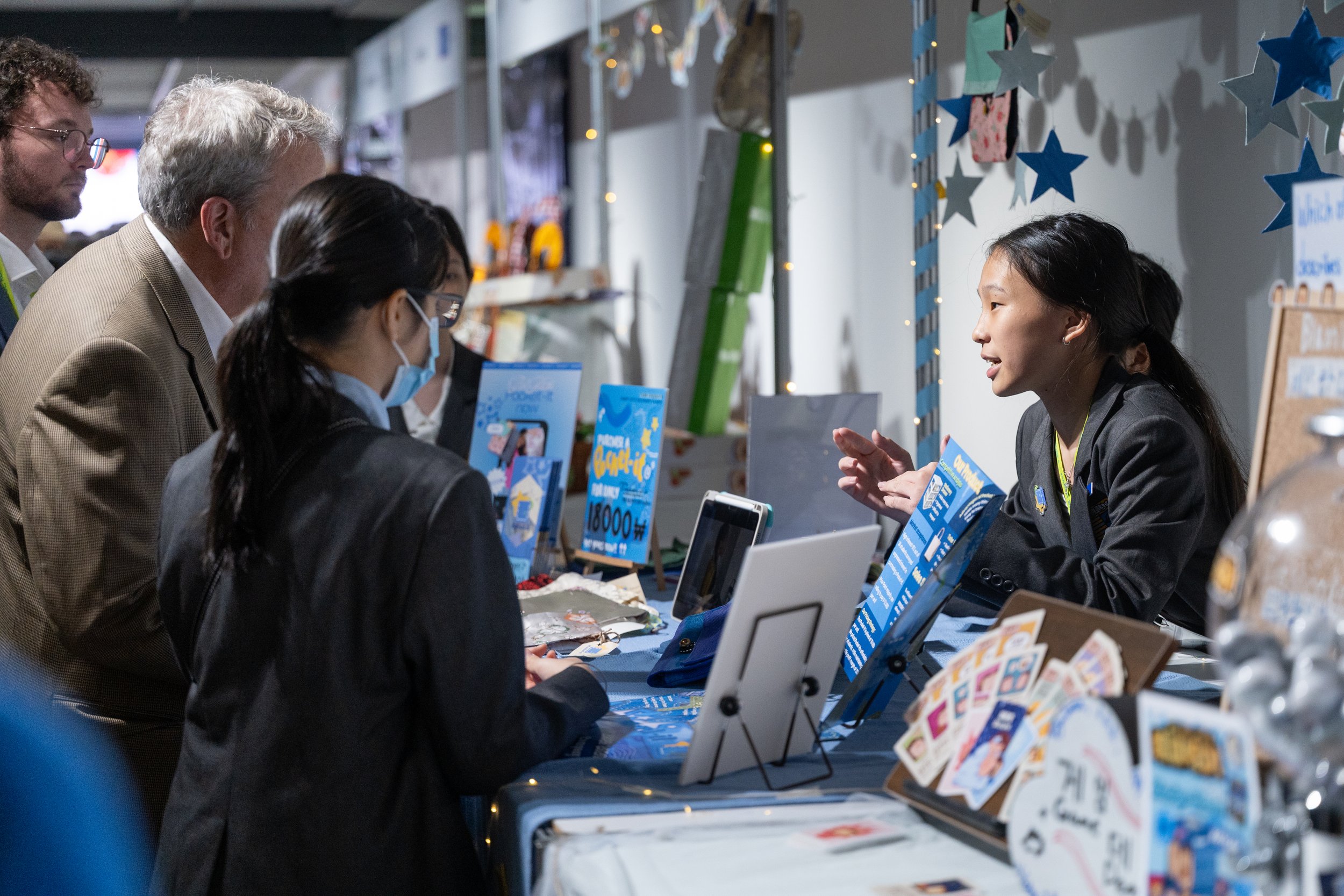
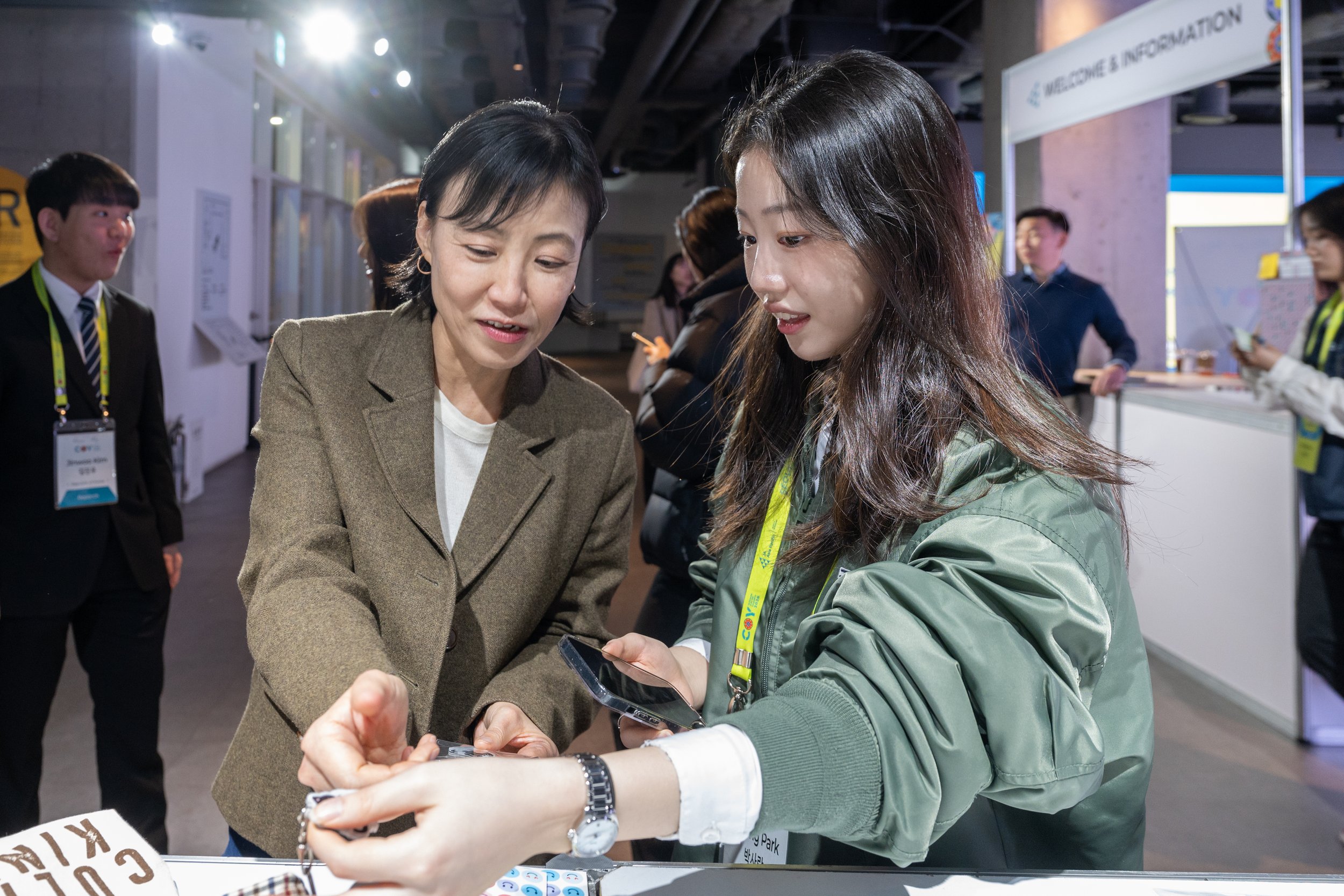
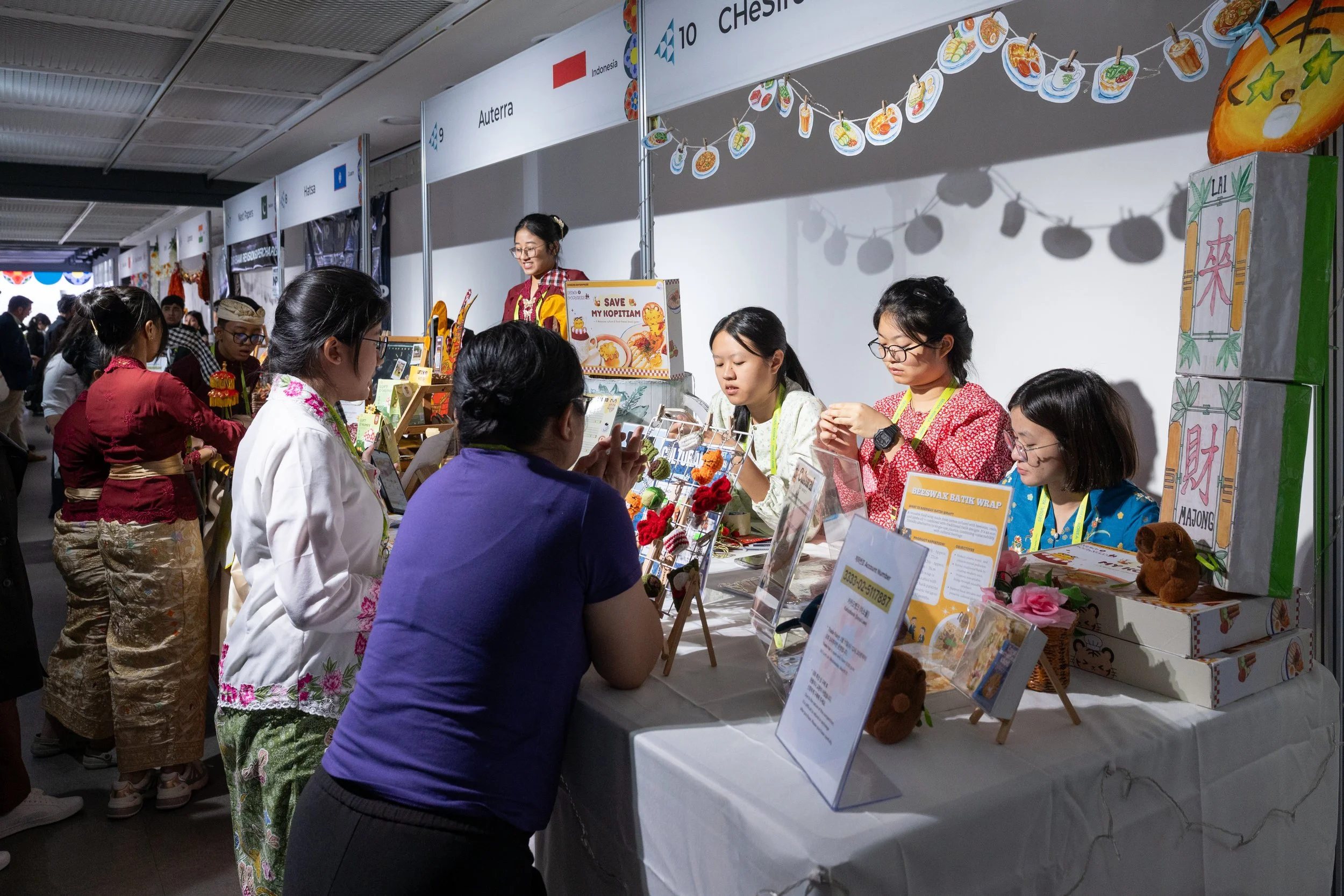
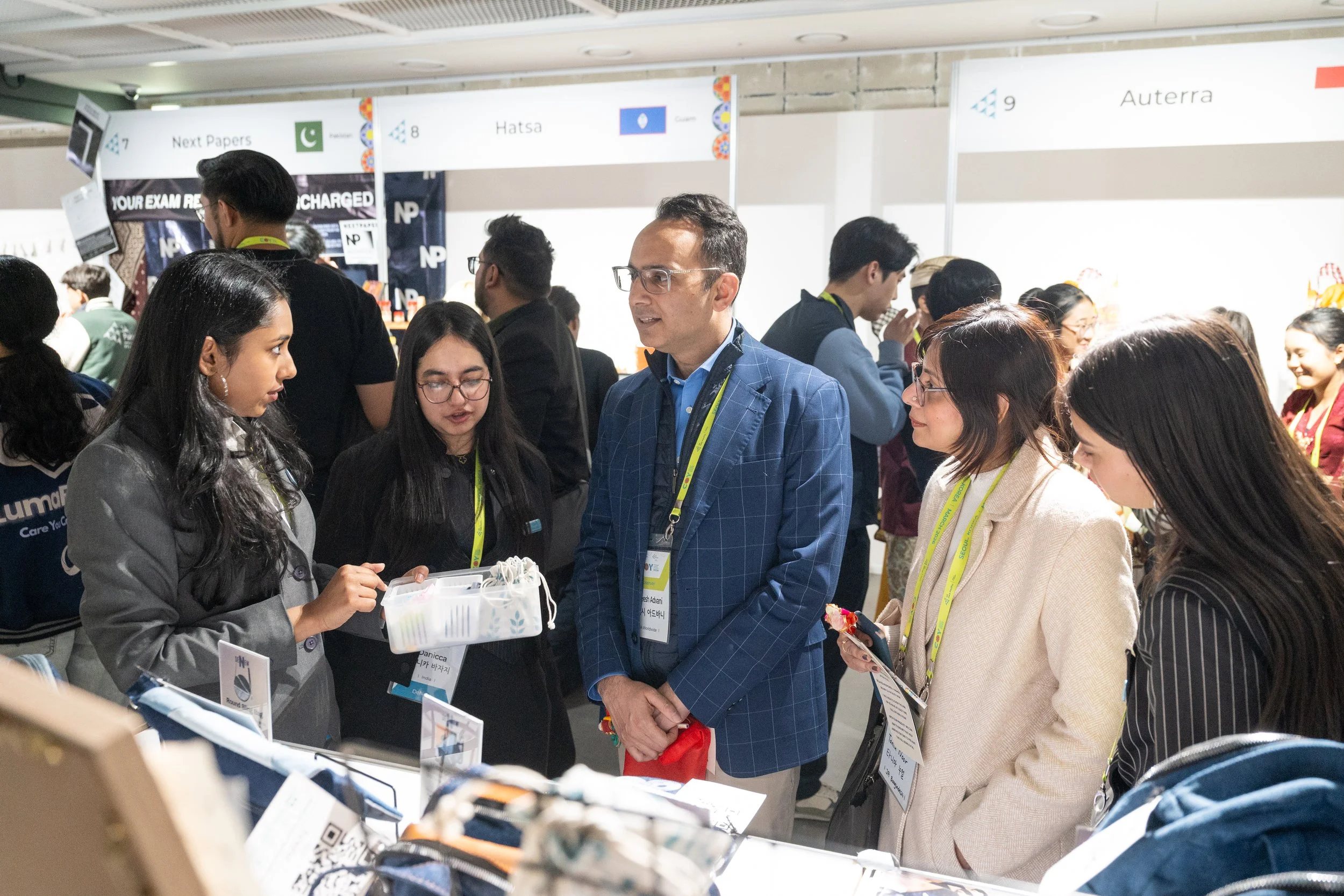
On Day 3, the energy of the competition moved into the public spotlight during the JA Asia Pacific Company of the Year Trade Fair at Yeongdeungpo Art Square in Seoul. The event invited the public to meet the student entrepreneurs, explore their products, and hear directly from the young people who built the companies.
Students designed booths to present their businesses, explain their products or services, and share the stories behind the companies. Visitors spoke with the student founders, learned about their ideas, and experienced firsthand the creativity and problem-solving that define the JA Company Program.
The trade fair highlighted the diversity of innovation emerging across the region. Student companies presented products ranging from educational tools and digital platforms to sustainability-focused products and creative consumer goods. Beyond the products themselves, students demonstrated the communication, teamwork, and entrepreneurial thinking that they developed while building their businesses.
For many participants, the trade fair offered their first experience presenting a product to a broad public audience, a key milestone in the entrepreneurial journey.
The Competition Stage
Following the trade fair, the competition shifted to formal judging sessions. Each team presented its company to panels of judges drawn from the business community, sharing the story of how their company formed, how they developed their product, and how they managed operations, marketing, and finances.
Judges evaluated teams on multiple factors, including innovation, financial performance, teamwork, and the impact of their businesses. Students also responded to questions about their strategy, decision-making, and future plans, demonstrating the critical thinking and professionalism they built throughout the JA Company Program.
These presentations marked the culmination of months of work by each team. Students had started with an idea, built a functioning company, developed and sold products, and now stood on stage representing their location in one of the region’s premier youth entrepreneurship competitions.
Celebrating the Next Generation of Entrepreneurs
On Day 4, the final day of the competition, students, educators, volunteers, and business leaders came together to celebrate the student companies and announce the 2026 winners. While only one team could earn the regional title, every student who participated demonstrated the initiative, resilience, and leadership that define entrepreneurship. Throughout the week in Seoul, participants strengthened their business skills, expanded their perspectives, and built friendships across borders.
Experiences like the JA Asia Pacific Company of the Year Competition show what happens when young people gain the opportunity to turn ideas into real businesses. They learn by doing, develop confidence through experience, and discover how their creativity and determination can create value in their communities.
For the students who gathered in Seoul this year, the competition marked both the culmination of their work in the JA Company Program and the beginning of their next entrepreneurial chapter.
The Awards
MetLife Foundation Award for Best Financial Management: Hatsa, JA Guam
Product of the Year Award, third place: Wealth Wizards, JA Hong Kong SAR—China
Product of the Year Award, second place: Auterra, Prestasi Junior Indonesia
Product of the Year Award, first place: DeNew, tGELF (JA India)
PMIEF Best Application of Project Management, third place: Coastbusters
PMIEF Best Application of Project Management, second place: 3RMizu
PMIEF Best Application of Project Management, first place: Goal Getters
Popular Choice Award: Konni’, JA Guam
JA Asia Pacific Company of the Year
Third place: DeNew, tGELF (JA India)
Second place: Aurora Enterprise, JA Malaysia
First place: Wealth Wizards, JA Hong Kong SAR—China
As the JA Asia Pacific Company of the Year, Wealth Wizards will represent the region and compete for the 2027 De La Vega Global Entrepreneurship Award alongside the regional champions from Junior Achievement USA (Future Bound in June 2026), JA Europe (GEN-E in July 2026), INJAZ Al-Arab/JA MENA (YEC in November 2026), JA Americas (COY in December 2026), and JA Africa (COY in December 2026). Learn about the 2026 De La Vega Global Entrepreneurship Award, which took place earlier this month.